Task Testing
Part of AI tool integration
Testing an AI step inside an existing work process
Follow an AI step from the normal trigger to an approved record, including field mapping, review, failed runs and recovery.
Test an AI step by following a work item from its usual trigger to the approved record. Include the reviewer, the receiving system and the failure route. A useful response in a product preview covers only part of that process.
Fix the process boundary
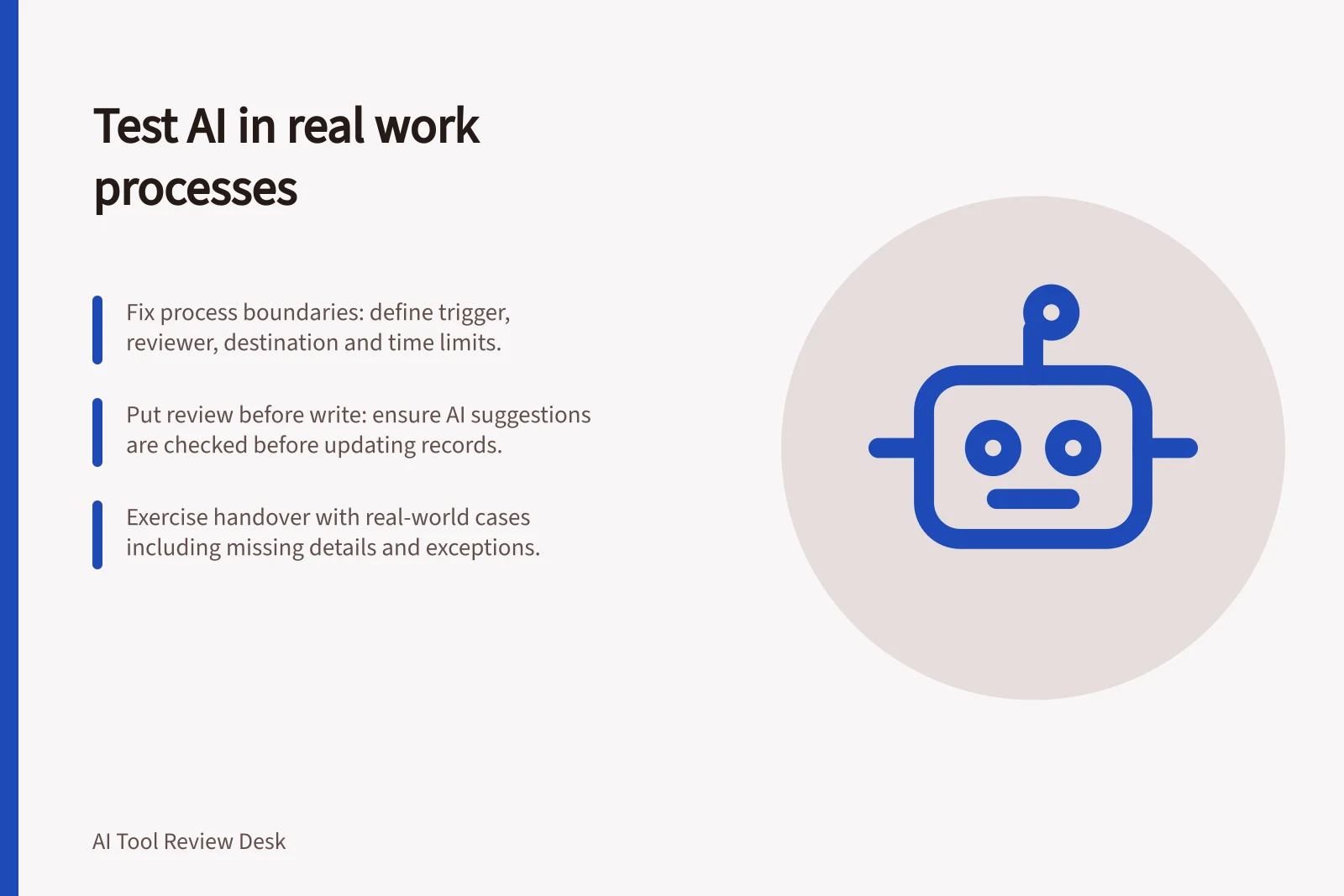
Suppose a team wants AI to suggest a category and short summary for supplier enquiries. This is a fictional exercise. The process begins when an enquiry arrives and ends when a staff member records an approved category and next action. Keep those boundaries fixed while examining the added step.
Use the example to examine a process your team already runs, substituting its real trigger, review and destination.
Record the trigger, permitted inputs, approved reference material, requested fields, reviewer, destination and time requirement. State what the AI must leave undecided. For example, a request for an exception may need a person rather than an invented category or promise.
AI vs Human Decision Points in Supplier Enquiry Processing
- AI CapabilitySuggests category and summary based on input. Cannot handle exceptions or unstructured ambiguity.
- Human ResponsibilityApproves, corrects, handles exceptions. Must verify against source and ensure correct record update.
Put review before the write
A proposed route is: receive an authorised test enquiry, generate a suggestion, check it against the original message, approve or correct it, update the right record, and confirm the original and decision remain linked. If the AI can act in another app, identify the exact action and its approval point.
In any workflow platform, inspect mapped fields, enabled tools and approval settings. Do not assume a preview reflects how a live workflow will run.
For a custom OpenAI API route, the application executes a function requested by the model. The implementation team must control which functions exist, what inputs they accept and when a write may proceed. Define the fields the application accepts, check required fields are present before a write, and plan an exception path for incomplete responses.
Exercise the handover
Use invented or otherwise authorised, non-sensitive items that resemble the process. Include a routine enquiry, one with missing details, an ambiguous category, an exception request and an unavailable destination record. Decide the expected human action for each before examining AI output.
For each item, record whether the suggestion was reviewable, whether the reviewer could check it against the source, what correction was needed and whether the final update reached the right original record. Keep failed and abandoned runs. An acceptable-looking suggestion that reaches the wrong record fails this process check.
Check recovery and decide narrowly
Examine what happens when a field is absent, review is delayed or a retry repeats a proposed update. The receiving process needs a way to recognise an item it has already handled. Name who receives an exception and how work continues without the AI step. These are conditions for a future exercise, not observed results.
Report the input types, account settings, approval point, accepted outcomes, correction work and unresolved cases. Fictional material may establish whether the handover is workable, but it cannot establish performance on restricted records or authorise their use. Where personal information is involved, assess the proposed real-data flow separately. Include appropriate privacy review and human oversight.
Key Testing Metrics for AI Workflow Validation
- 1Failed or Abandoned Runs
- 3Human Corrections Required